Cabin Beds – FAQs
What are cabin beds?
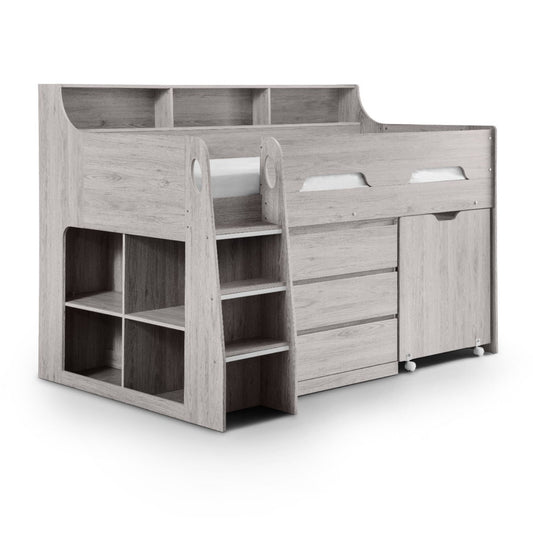
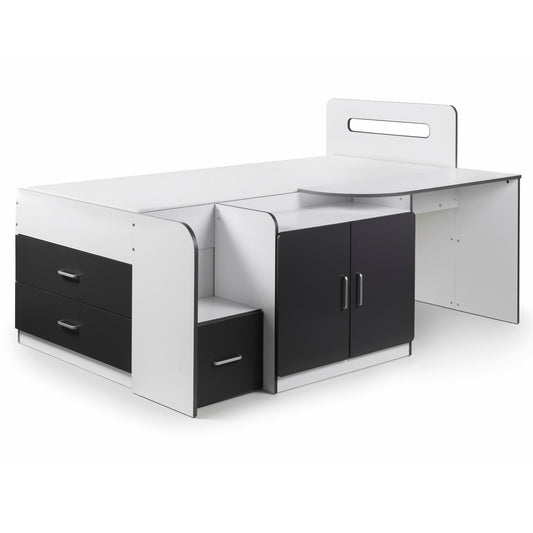
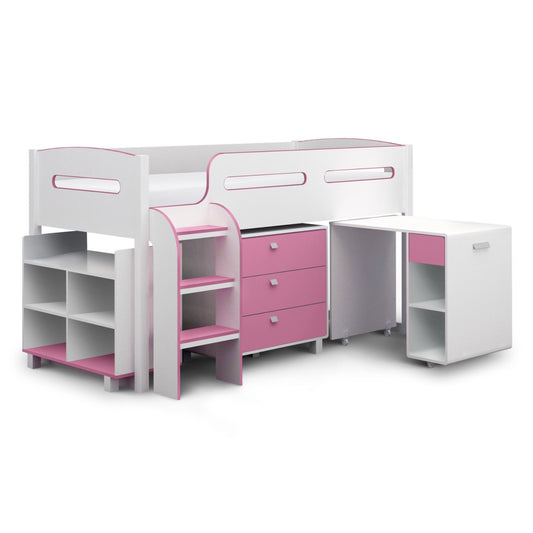
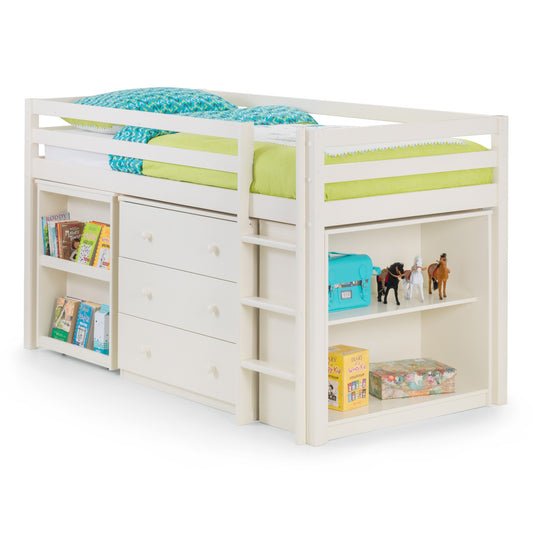
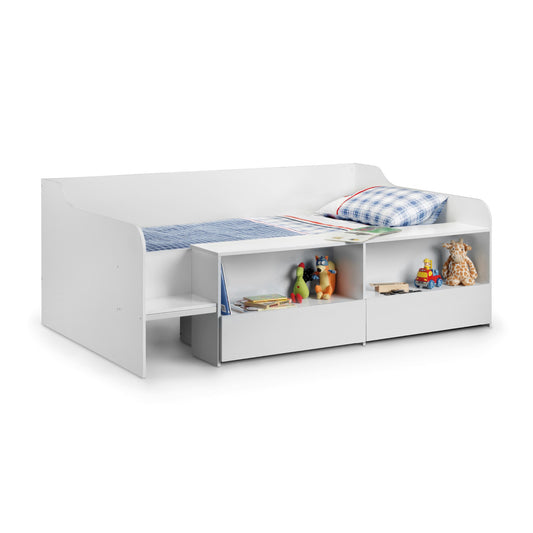
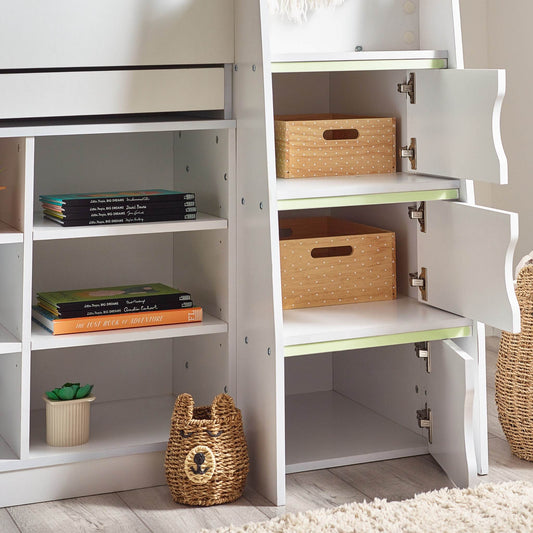
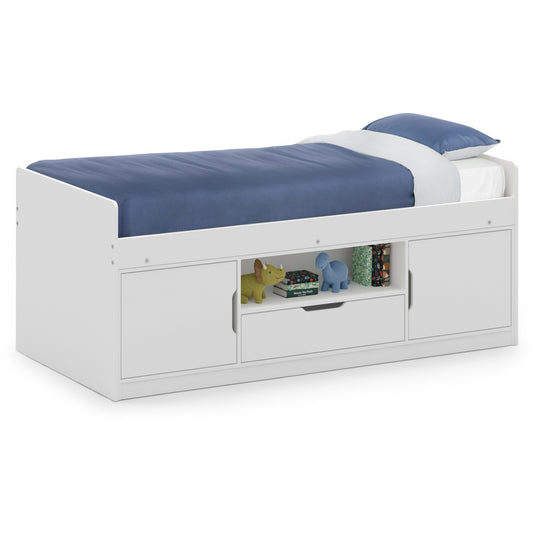
Children's cabin beds have a raised design with built-in features such as shelves, drawers or cupboards.
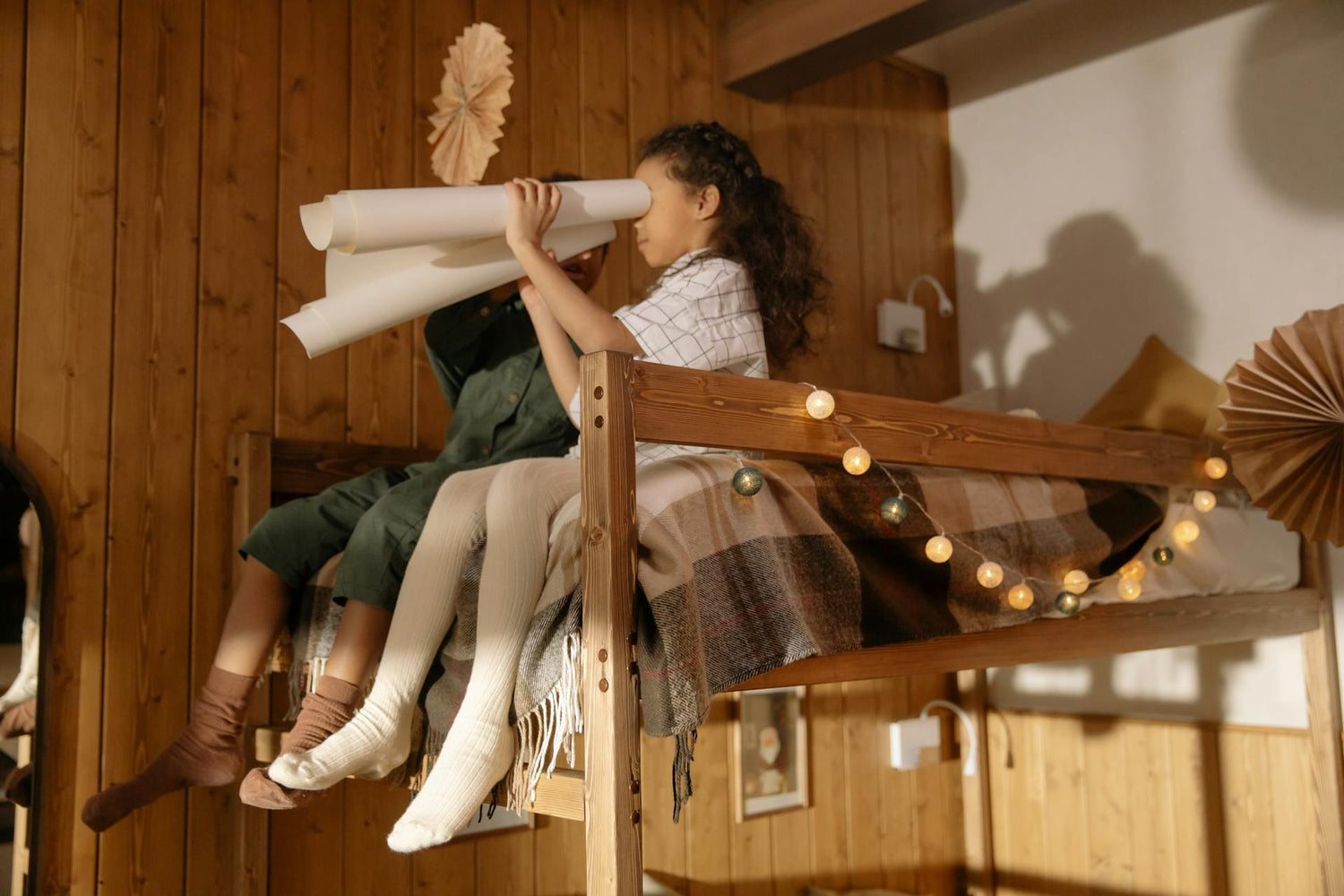
They sit slightly lower than mid sleepers and are usually accessed by one or two small steps rather than a ladder.
With their compact, space-saving design, cabin beds are a great choice for younger children and smaller rooms.
Can a four-year-old sleep in a cabin bed?
Yes, a low cabin bed is typically suitable for children aged four upwards, where a small step-up offers easier access.
Before this age, toddlers are still developing their balance, so a smaller bed that suits their age group is the safer option.
Ensure your child is steady on their feet and follow the manufacturer’s age guidance when choosing.
Cabin bed vs mid sleeper — What’s the difference?
Cabin beds and mid sleepers often describe similar raised bed styles, so it’s common for their names to overlap.
Cabin beds with easy step access have a lower, more compact profile and are ideal for younger children.
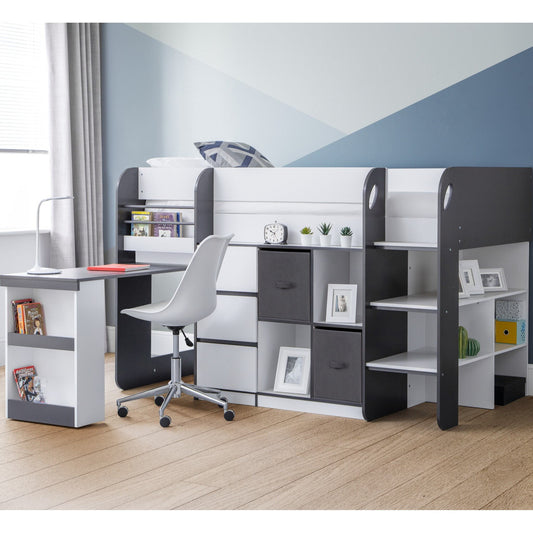
Taller designs with ladder access, like a mid sleeper cabin bed, offer more space for storage and suit older kids.
When choosing, it’s best to focus on the bed’s height, access and recommended age, not the bed’s name.
Do cabin beds come with desks?
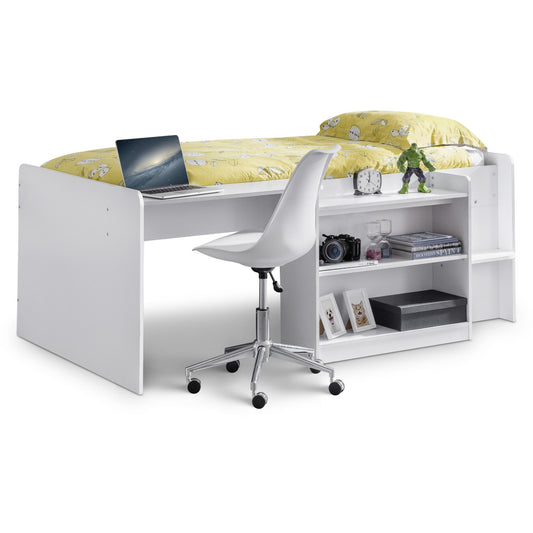
Yes, some cabin beds include a built-in desk or practical surface area, depending on their style.
Larger pull-out desks are usually found on higher desk beds such as midsleepers, offering more space to study.
Our range includes a variety of cabin beds with desks, designed to suit children from four years into their teens.
Are kids' cabin beds suitable for adults?
In theory, an adult can sleep in a kids' cabin bed as long as the bed’s maximum weight limit isn’t exceeded.
Unless otherwise stated, a children’s cabin bed has a total weight capacity of around 75kg, including the mattress.
A single mattress weighs around 10–15kg, leaving more than enough to support a typical child, teen or small adult.

 Sold out